
- All Blogs|
- Back
- |
- |
The conference abstract is available online – https://doi.org/10.3897/aca.1.e30282 and a video of Michael Curran‘s talk will be forthcoming. eDNA metabarcoding...
Bennelongia is excited to welcome Connie Mandrakas into the team. She has extensive accounting and bookkeeping experience in Australia and...

The Managing Director, Stuart Halse, has had a book chapter published in ‘On the Ecology of Australia’s Arid Zone’. Stuart’s...

The 24th International Conference on Subterranean Biology recently concluded. It was held in the University of Aveiro, Portugal. This small...

Bennelongia is excited to reveal the pending descriptions of several new species of stygobitic diving beetles (Dytiscidae) that were collected...

Bennelongia’s resident taxonomic powerhouse Jane McRae, former Bennelongia principle scientist Dr Andrew Trotter and senior ecologist Dean Main and geneticist...
In the latest of several key additions, the excellent Robyn Murphy has joined the Bennelongia team as our new Administrator....
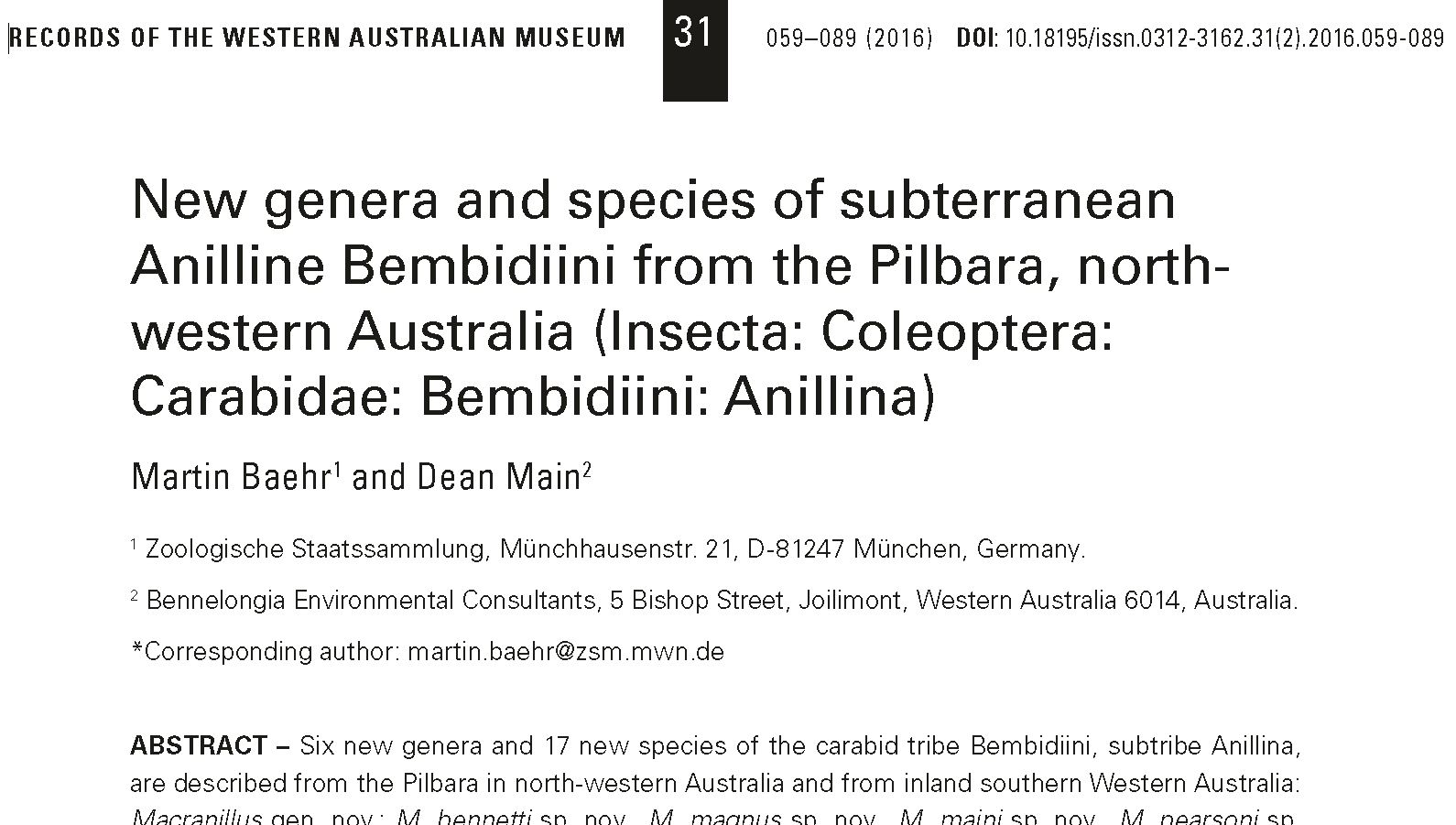
Six new genera and 17 new species of troglobitic carabid beetles (Carabidae) from the Pilbara and Yilgarn regions have recently...
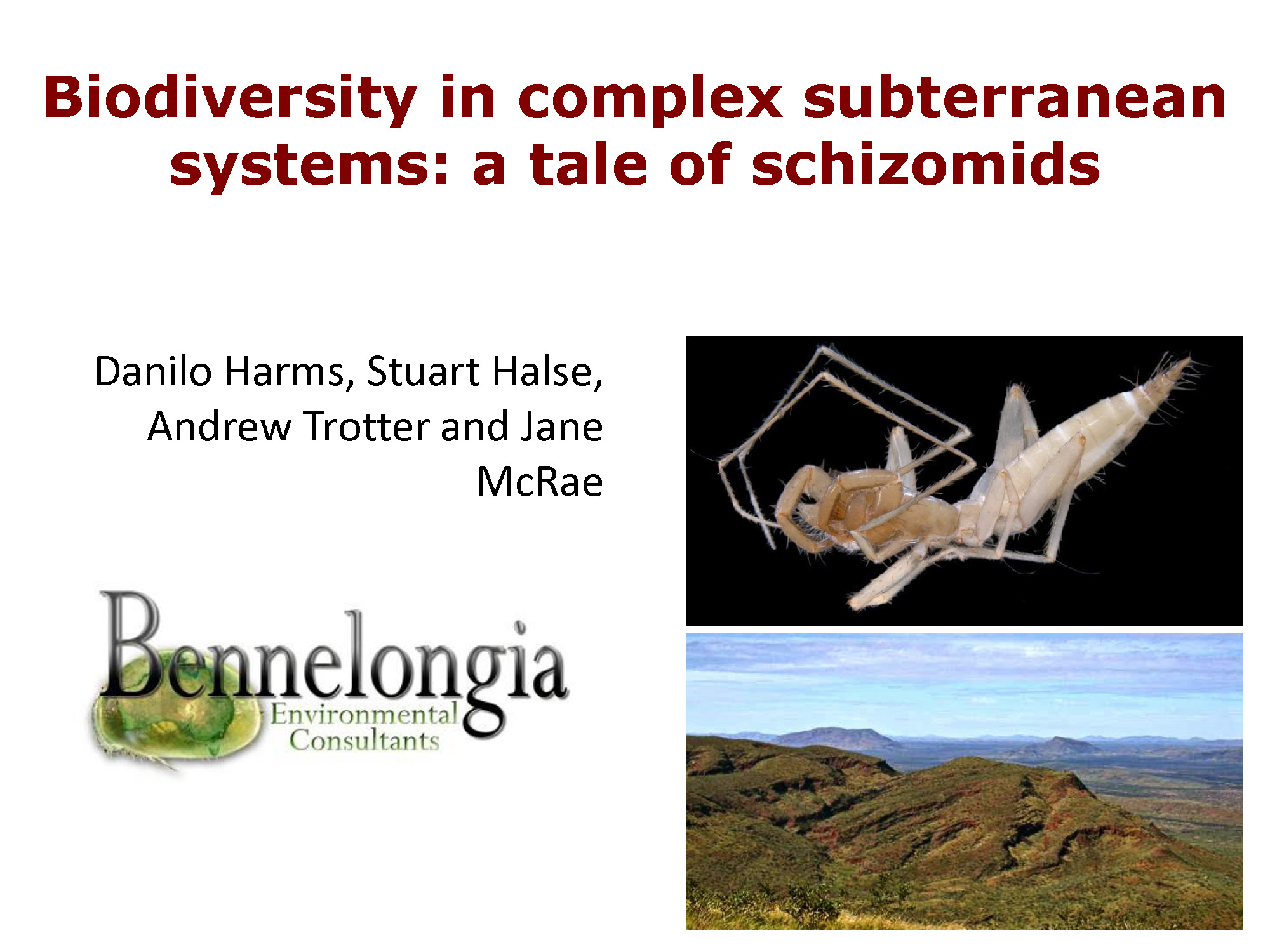
In December 2015, Dr. Danilo Harms presented on patterns of diversity in subterranean systems at the Society of Australian Systematic...
Danilo Harms has swiftly resigned at Bennelongia to take up the highly esteemed position of Curator of the Zoological Museum...